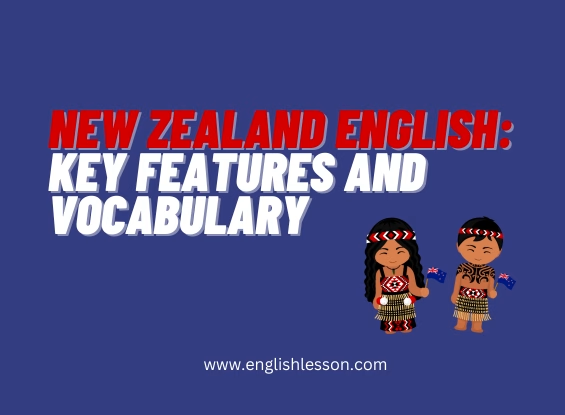
New Zealand English: Key Features and Vocabulary
Common Kiwi Words
Everyday Terms
- General Words
- Sweet as (Great/Okay)
- Choice (Excellent)
- Tiki tour (Scenic route)
- Dairy (Corner store)
- Bach/Crib (Holiday home)
- Jandals (Flip-flops)
- Togs (Swimwear)
- Chilly bin (Cooler)
- Food and Drink
- Kai (Food)
- Pavlova (Meringue dessert)
- Hokey pokey (Honeycomb toffee)
- Fizzy drink (Soda)
- Lollies (Candy/Sweets)
- Marmite (Yeast spread)
- Kumara (Sweet potato)
Māori Influence
- Common Words
- Kia ora (Hello/Thank you)
- Whānau (Family/Extended family)
- Puku (Stomach)
- Mana (Prestige/Power)
- Hui (Meeting)
- Tamariki (Children)
- Whenua (Land)
- Place Terms
- Marae (Meeting ground)
- Waka (Canoe/Vehicle)
- Motu (Island)
- Pa (Fortified village)
- Kainga (Home/Village)
Pronunciation Features
Vowel Sounds
- Short ‘i’
- Fish sounds like “fush”
- Six sounds like “sux”
- Chips sounds like “chups”
- ‘e’ Sounds
- Bed sounds like “bid”
- Head sounds like “hid”
- Red sounds like “rid”
Consonants
- Notable Features
- ‘R’ dropping after vowels
- ‘T’ glottal stop between vowels
- ‘L’ vocalization in final position
- Regional Variations
- Southland roll of ‘R’
- Auckland urban accent
- Rural vs city differences
Grammar Patterns
Unique Features
- Tag Questions
- “Eh?” at end of sentences
- “Aye?” for confirmation
- “Right?” for agreement
- Sentence Structure
- “She’ll be right” (It will be okay)
- “Yeah, nah” (No)
- “Nah, yeah” (Yes)
Time Expressions
- Common Phrases
- “In the arvo” (Afternoon)
- “This morning/arvo/evening”
- “Back in the day”
Cultural Context
Social Interactions
- Greetings
- “Gidday” (Hello)
- “How’s it going?”
- “Good as gold” (Fine)
- “Cheers” (Thanks)
- Farewells
- “See you round”
- “Catch you later”
- “Take care, eh”
- “Hooroo” (Goodbye)
Social Values
- Key Concepts
- Tall poppy syndrome
- No. 8 wire mentality
- She’ll be right attitude
- Fair go
Regional Variations
North Island
- Auckland
- Urban slang
- Multicultural influence
- Modern expressions
- Wellington
- Political terminology
- Arts influence
- Café culture terms
South Island
- Christchurch
- Traditional terms
- Scottish influence
- Rural expressions
- Southland
- Strong ‘R’ roll
- Rural terminology
- Traditional phrases
Common Situations
At Work
- Office Talk
- “Smoko” (Break time)
- “Keen” (Enthusiastic)
- “Gutted” (Disappointed)
- “Knackered” (Tired)
- Business Terms
- “On the job” (At work)
- “Sort it” (Fix it)
- “Give it a go” (Try it)
- “No worries” (It’s fine)
Social Settings
- Casual Conversation
- “Catch up” (Meet)
- “Bring a plate” (Bring food to share)
- “BYO” (Bring your own)
- “Barbie” (Barbecue)
- Sports Talk
- “All Blacks” (Rugby team)
- “Give it heaps” (Try hard)
- “Good on ya” (Well done)
- “Legend” (Great person)
Food and Dining
Common Food Terms
- Local Foods
- Hangi (Traditional Māori cooking)
- Whitebait fritters
- Fish and chips
- Lamingtons
- Anzac biscuits
- Meal Times
- Breakfast
- Morning tea
- Lunch
- Afternoon tea
- Tea (Dinner)
Nature and Environment
Outdoor Terms
- Landscape
- Bush (Forest)
- Gully (Valley)
- Paddock (Field)
- Creek (Stream)
- Track (Trail)
- Weather
- Fine (Clear weather)
- Rough (Bad weather)
- Packed in (Weather turned bad)
- Southerly (Cold wind)
Modern Usage
Contemporary Slang
- Youth Language
- “Mean” (Great)
- “Mint” (Perfect)
- “Sup” (What’s up)
- “Bro” (Friend)
- Social Media
- Online abbreviations
- Text speak
- Emoji usage
- Digital communication
Tips for Learners
Learning Strategies
- Immersion
- Watch NZ TV shows
- Listen to NZ radio
- Read NZ news
- Follow NZ social media
- Practice
- Use common phrases
- Learn Māori words
- Practice pronunciation
- Engage with locals
Common Mistakes
- Pronunciation
- Vowel sounds
- Intonation patterns
- Stress placement
- Māori words
- Usage
- Context errors
- Formality levels
- Cultural references
- Regional variations
Remember: New Zealand English is unique in its blend of British English, Māori language, and local innovations. Understanding cultural context is key to proper usage.